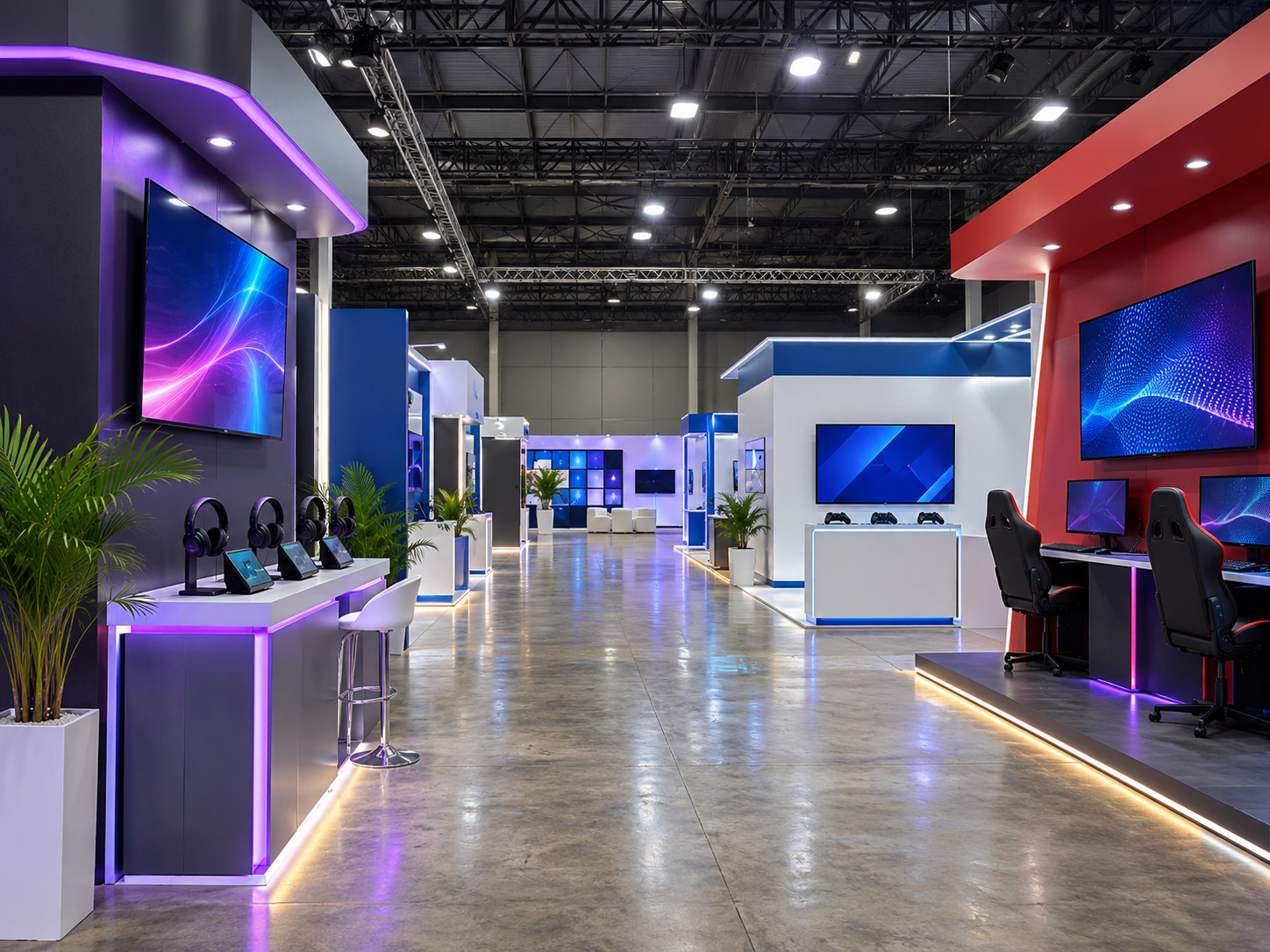

In Kenya, mobile games and football esports share the spotlight with a substantial sports-betting business. Nairobi hosts developers and tournament organisers; events also reach Mombasa, Kisumu, Nakuru and Eldoret. Nigerian readers will recognise the smartphone-led habits. The differences emerge when people pay, compete or navigate gambling rules.
Gaming does not describe a single industry. Players buy video games or fund them through advertising and in-app purchases. Esports is competition built around particular titles. Betting and casinos take wagers and need gambling licences. Kenyan bookmaker turnover should never be folded into video-game revenue.
Kenya's gaming market at a glance
| Segment | What it includes | Main commercial or regulatory question |
|---|---|---|
| Video gaming | Android and iOS games, console and PC titles, locally developed games | Device access, data costs, finding and payment for digital content |
| Esports | EA Sports FC, eFootball, PUBG Mobile and other competitive titles | Tournaments, organisers, teams, sponsorship and player development |
| Betting and iGaming | Sportsbooks, online casinos and lotteries | Operator licensing, identity checks, taxation and responsible gambling |
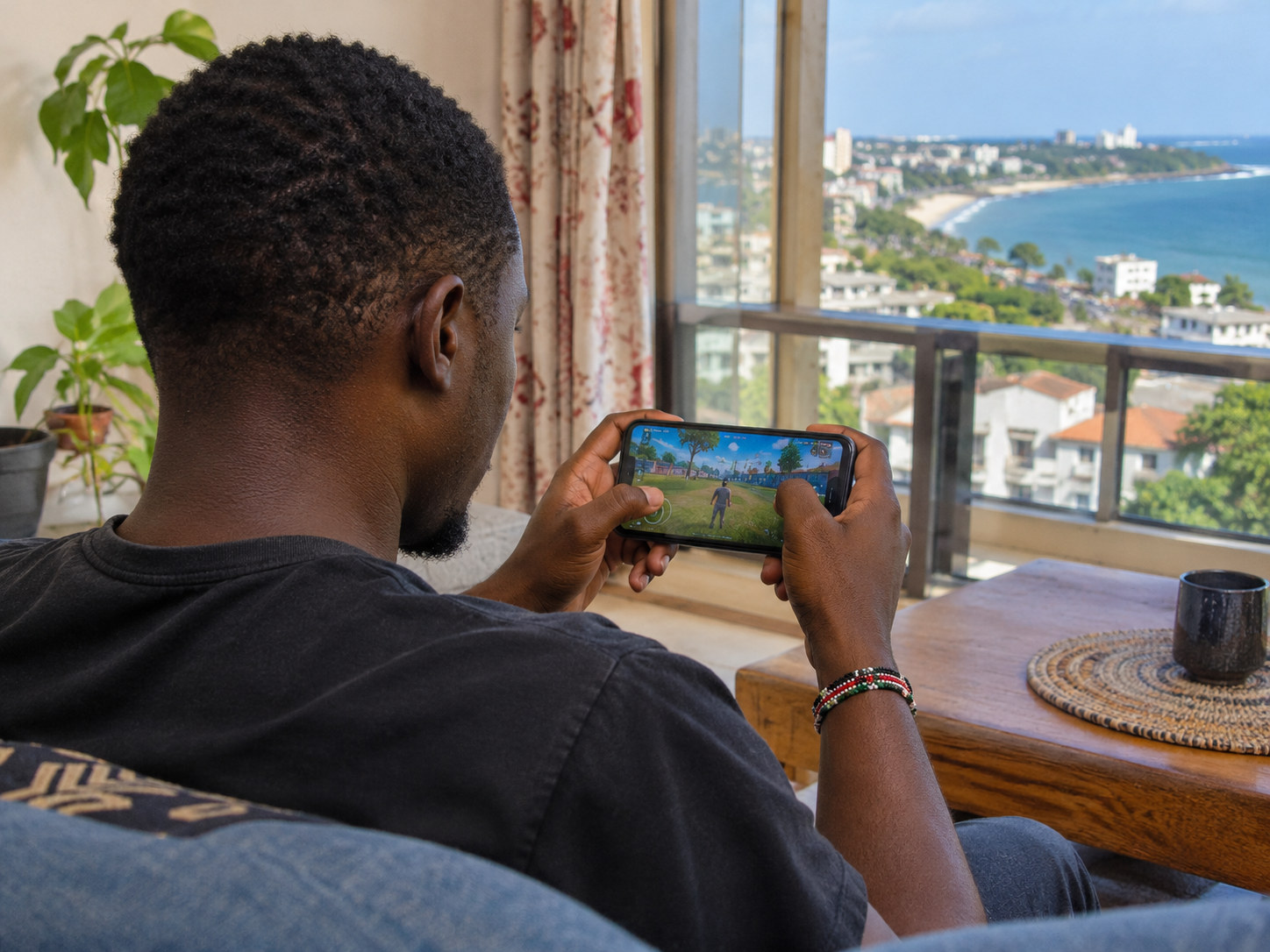
Affordable phones and mobile money help Kenya reach players. Expensive data, inconsistent connections and the cost of gaming hardware still limit what they can play. A short mobile session is easier to accommodate than a graphics-heavy online match.
Why mobile gaming dominates
DataReportal's Digital 2027 Kenya figures put internet users at 23.9 million, or 40.6% penetration, using late-2026 data. The report counts 85.5 million cellular connections. That is not 85.5 million people: one person may hold several SIMs, and a connection need not offer mobile data. Neither figure counts gamers.
In the four-country GeoPoll Gaming in Africa survey , 92% of respondents played on phones; 92% had downloaded games from Google Play. The sample covered Kenya, Nigeria, Egypt and South Africa. Those results are not a Kenya-only estimate . They do help explain why Android gaming has a lower entry cost than buying a PlayStation 5 or gaming PC.
Price is the next hurdle. In the same survey, 47% preferred free games, 44% reported insufficient funds, 42% cited data-bundle costs and 31% expensive hardware. A free-to-play game can still be costly to download and update. For developers, manageable file sizes, good performance on mid-range phones and offline play where feasible can matter more than elaborate graphics.
How big is the Kenyan video-game economy?
PwC's Africa Entertainment and Media Outlook 2026 - 2030 projects US$133 million in Kenya by 2030 from video gaming, versus US$431 million in Nigeria and US$698 million in South Africa. These are forecasts for an entertainment-and-media category, not realised sales or gambling receipts.
Business Daily's account of Newzoo's 2023 data gives a narrower view: US$39.8 million spent on mobile games by 3.4 million paying Kenyan players. For Nigeria, it reports US$229.7 million and 14.7 million paying players. The year, audience and revenue definition differ from PwC's forecast, so the two figures cannot establish a growth rate on their own.
For a publisher, the distinction is financial. A download does not equal an active player; an active player need not buy anything. Advertising revenue, in-app spending, prize money and betting stakes belong in separate accounts. Otherwise, an impressive audience figure can disguise a weak business model.
What games do Kenyan players compete in?
Football anchors much of Kenya's visible competitive scene. EA Sports FC, which succeeded the FIFA-branded series, draws PlayStation players. eFootball and FC Mobile run on phones. Tekken 8 adds fighting-game competition; PUBG Mobile, Call of Duty: Mobile and Mobile Legends: Bang Bang bring multiplayer formats. Valorant, Dota 2, Rocket League, League of Legends and Honor of Kings also appear in community activity. A game appearing at an event does not establish how many Kenyans play it.
At the March 2026 eLigue1Tour Kenya , organisers recorded 3,287 registrations: 2,127 in FC Mobile and 1,160 in PlayStation's EA Sports FC 26. Qualifiers took place at BBS Mall in Eastleigh; the final was linked to the University of Nairobi, with a Paris trip tied to France's Ligue 1 competition. That mobile-to-console split belongs to this event, not to the country as a whole.
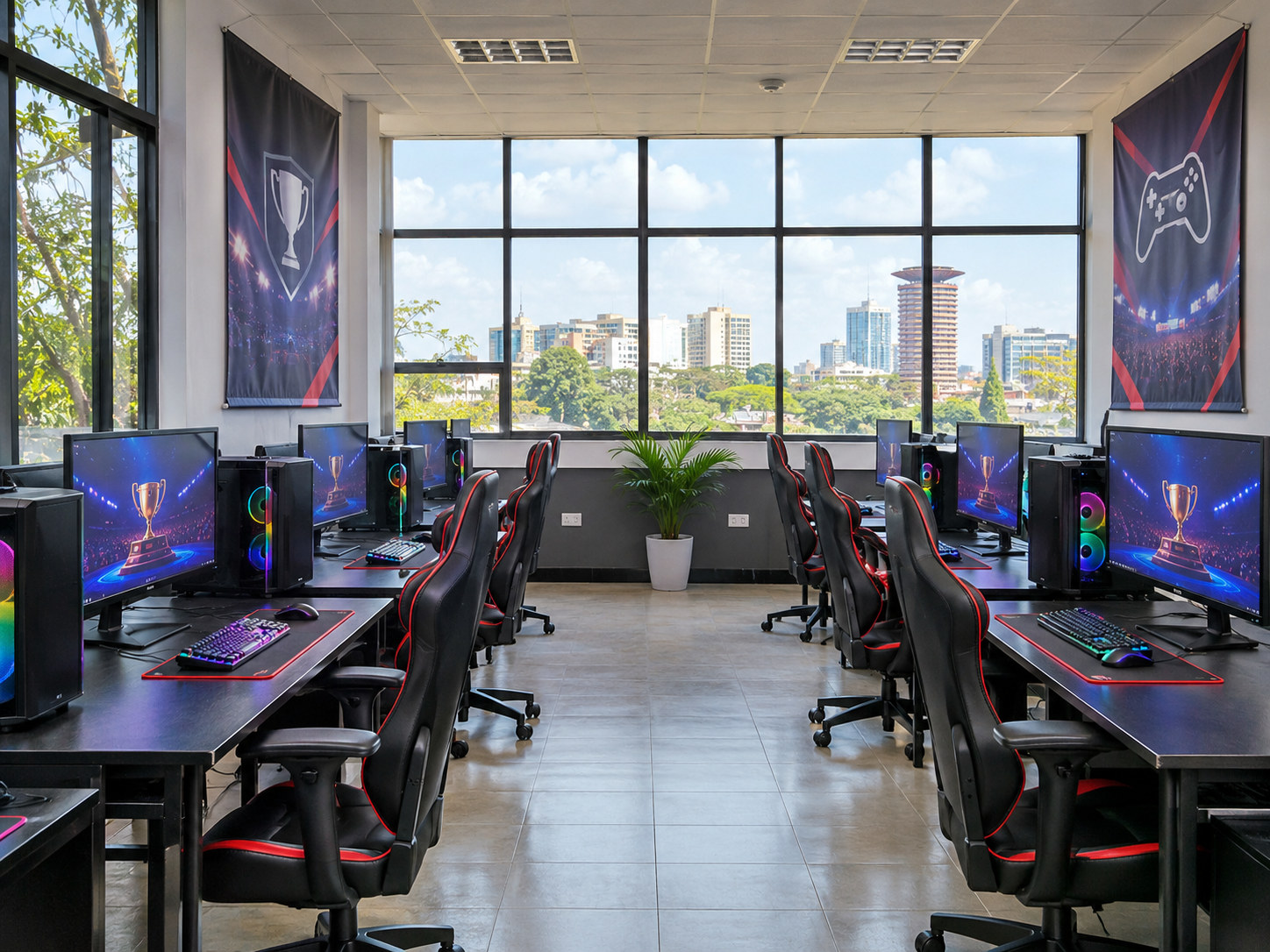
Gaming cafés and campus events serve players without their own consoles. They supply hardware and places to meet opponents. Home smartphone use may be widespread, but the cost of PlayStation equipment still shapes who enters console tournaments.
Esports beyond Nairobi
The Electronic Sports Kenya Federation (ESKF) , known as Esports Kenya, says it was founded in 2018. It promotes tournaments and team development and reports recognition by the National Olympic Committee of Kenya in December 2024. Recognition does not give every tournament a special legal status or guarantee government funding for players.
In 2025, the Kenya Esports Series scheduled stops in Nakuru, Eldoret, Mombasa, Kisumu and Nairobi. The line-up covered eFootball Mobile and console, EA Sports FC 26, FC Mobile, Tekken 8, PUBG Mobile, Call of Duty: Mobile and Mobile Legends. Regional stops open a route beyond the Nairobi circuit. Campus contests and café leagues remain the more accessible starting points.
Kenyan competitors have sought places in events linked to the FIFAe Nations League, Global Esports Games and Esports Nations Cup. The route to paid competition is narrow: equipment, training, travel and stable internet all cost money, while prize earnings fluctuate. Commentary, event production, coaching, streaming and community management create other roles, though none promises a regular wage.
Kenyan studios are building their own games
The Nairobi Game Development Centre in Parklands offers workspace and a community for developers. Nairobi-based Usiku Games works on educational and behaviour-change games, operates the centre and helped establish the Pan Africa Gaming Group (PAGG) . The network connects African game makers; Usiku's projects show how local studios can work outside the conventional entertainment market.
Kenyan studios have taken notably different routes:
- Weza Interactive Entertainment : created Mzito , an African-inspired adventure, and is developing Riziki , a rhythm-game concept built around African music. The fictional Mzito world puts African stories at the centre of play.
- Mekan Games : the Nairobi mobile studio behind the comedy-led casual game The President . It reports more than 20 million players; that is the studio's claim, not an audited number of paying users.
- Jiwe Studios : works with African stories and creator tools. Its Jiwe IO initiative has backed projects including Ma3 Simulator ; the educational game Umoja draws on the Kenyan Swahili Coast.
The Africa Games Week studio directory names Adala Studios, Arkitech Studios, Asili Entertainment, Kunta Content, Urban Gurus, WaweruAnimation and Arnelese among Kenyan teams. A listing does not reveal sales, staff numbers or how many games have shipped. Developers still need testing, funding, storefront visibility and publishing support.
M-Pesa, distribution and the difficulty of getting paid
Safaricom's M-Pesa makes mobile payments familiar to Kenyan consumers. But a player using M-Pesa for daily purchases may still be unable to use it for a particular game. Google Play and Apple apply their own billing conditions; payment integrations, fees and settlement arrangements depend on the product and platform. A publisher has to check the actual checkout route.
Google Play and Apple's App Store make distribution possible, not finding. Free downloads can earn money through rewarded ads or in-app purchases such as skins and virtual currency. Paid downloads, sponsorship and commissioned education games work differently. Advertising needs repeat players; purchases need payment support; client-funded games need commissions. No model produces revenue merely by reaching a download milestone.
For a Nigerian studio, a checkout built around naira, bank transfers or a domestic processor is not automatically suitable for Kenya. Customers see prices in Kenyan shillings (KES), and the provider must support the transaction. Currency conversion and tax treatment follow the platform and the sale. A Kenyan studio publishing in Nigeria faces the reverse problem.
The 2026 State of the African Video Game Industry project , prepared by SpielFabrique with Xsolla's support, identifies payment friction, limited funding and patchy infrastructure across African markets. Its regional findings do not imply identical conditions in Kenya and Nigeria.
Betting and iGaming operate under different rules
Sports betting, online casinos and lotteries operate alongside, not inside, Kenya's video-game economy. SportPesa, Betika, OdiBets, betPawa and Mozzart Bet are names associated with the sportsbook market. A familiar brand name alone cannot establish whether a particular website or gambling activity currently has permission to operate.
Kenya's Gambling Control Act, No. 14 of 2025 took effect on 26 August 2025. It created the Gambling Regulatory Authority of Kenya (GRA) in place of the Betting Control and Licensing Board (BCLB) . Betting, casinos, lotteries and online gambling fall within the framework; 2026 regulations cover licences, operator conduct, advertising, appeals and foreign-based businesses. A Kenyan permission does not authorise gambling services in Nigeria.
CMS's August 2026 legal overview distinguishes online bookmaker, casino and lottery licences, including rules relevant to foreign-based operators. Compliance also involves age and identity checks, anti-money-laundering controls and records of transactions. People trying to stop gambling can use the GRA's published self-exclusion process . Winnings from bets or esports prizes are not reliable employment income.
Gambling advertising faces scrutiny that ordinary game promotion does not. Under 2026 rules, the GRA and Kenya Film Classification Board (KFCB) review advertisements, while restrictions address marketing to minors and celebrity or influencer promotion. Business Daily described the two-stage approval requirements in July 2026. The Kenya Revenue Authority (KRA) handles gambling-related taxes; any quoted tax rate needs a current statutory reference.
Kenya and Nigeria: where the markets differ
| Question | Kenya | Nigeria |
|---|---|---|
| Where does everyday access begin? | Smartphones, mobile data, cafés and campus communities | Smartphones, mobile data and local gaming communities |
| Which payment context matters? | Kenyan shillings and M-Pesa are central local reference points | Naira, bank transfers and locally supported digital payment methods |
| What drives organised competition? | Football titles, mobile multiplayer games and regional esports events | Football, mobile and PC communities with their own organisers and tournament networks |
| Which creators illustrate local development? | Usiku Games, Weza Interactive, Mekan Games and Jiwe Studios | Maliyo Games and Kucheza Gaming are among the Nigerian teams listed by Africa Games Week |
| Do gambling licences cross the border? | No. Kenyan GRA permissions concern Kenya | No. Nigerian authorisation must be assessed under relevant domestic law |
PwC expects Nigerian video-game revenue to exceed Kenya's in 2030. Size alone tells a developer little about access to customers. A football title that works well for players in Lagos still needs to run on Kenyan devices and data plans, display workable prices and accept supported payments. English reduces one barrier. Football culture, local stories and visual references can affect whether the game connects with Kenyan players.
Where players and creators still encounter friction
Cost and visibility still hold players and studios back. Data bundles compete with household spending, weak connections interrupt matches and consoles put some events out of reach. App-store rankings give international franchises an advantage over unfamiliar local releases. In GeoPoll's 2024 four-country survey, 56% of respondents said they did not know of any Africa-made games. That is a regional figure, not a Kenyan count.
Mzito and Riziki use African stories and music. Usiku Games builds educational and behaviour-change projects; Mekan Games pursues accessible casual play. Their products answer different needs. For smaller studios, the question is not simply whether a game looks local, but whether it fits a player's phone, data budget and reasons for playing.
An esports tournament can draw a crowd without supporting full-time careers. Regular schedules, anti-cheating rules, affordable venues and workable sponsorship agreements are harder to sustain than a single final. Player income depends on that ongoing organisation, not just on the size of a prize headline.
What Kenya's gaming future depends on
A market-wide revenue forecast is not a studio sales target. For individual developers, lower data costs, working payments and visibility in app stores are more useful tests. Betting has a separate standard: lawful operators, consumer safeguards and enforcement by the GRA.
For a Nigerian publisher, a Kenyan launch begins with the handset: will the game run well, and how much data will it consume- Prices need to work in Kenyan shillings, and the platform must support payment. Tournament organisers face venue and rules questions; betting operators need authorisation in the jurisdiction they serve.