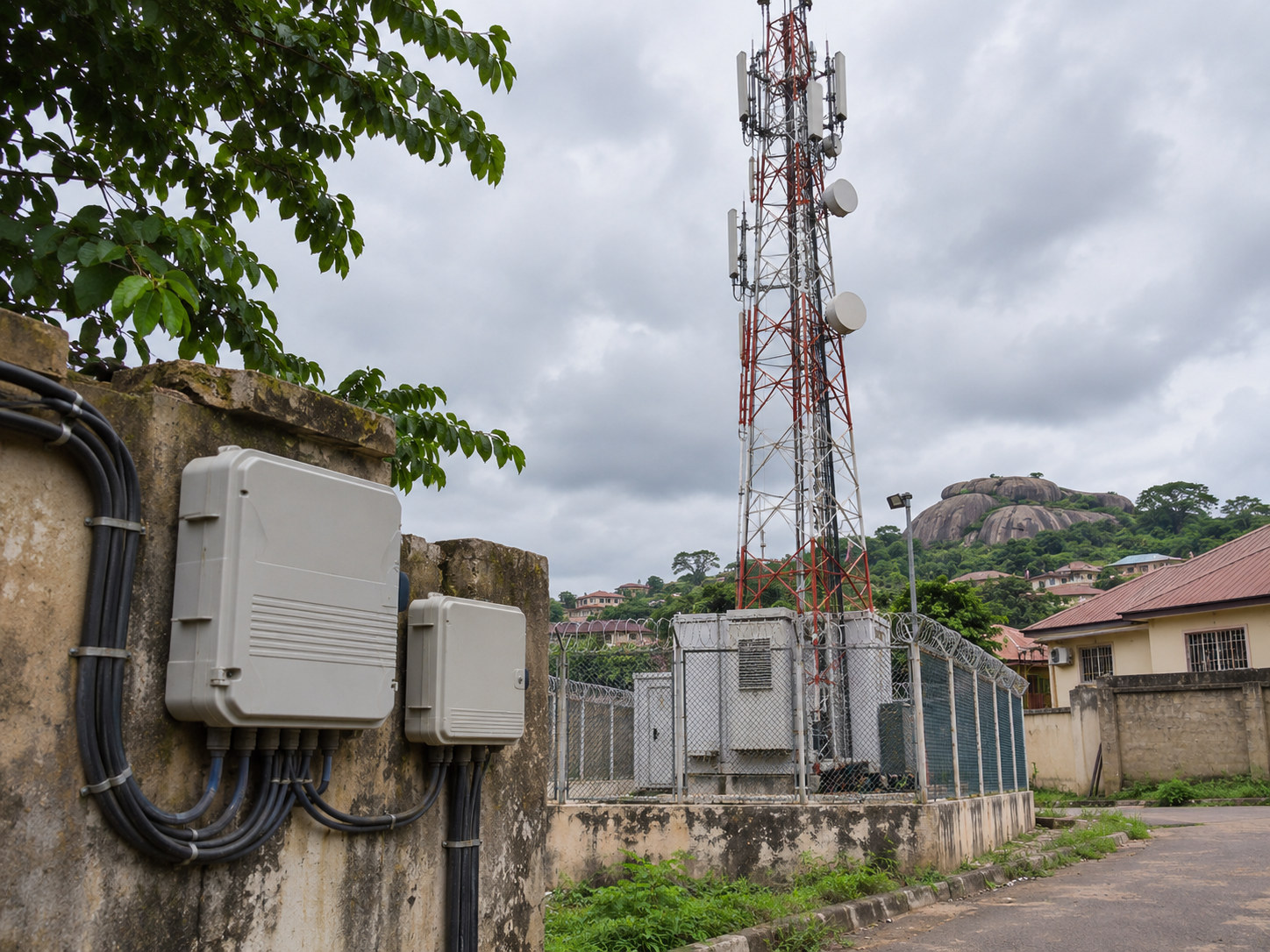

Payments and Fintech | Nigeria
A payment can leave a wallet in seconds, yet the recipient may still see nothing. Forged credit alerts, SIM takeovers and wrong-account transfers remain risks. In Nigeria, the provider behind the balance and the receiving account’s own record matter more than a fast “successful” screen.
OPay, PalmPay, Paga, Moniepoint and Kuda make everyday payments convenient, but their licences and customer protections differ. A trader confirming a sale, a POS agent paying out cash and someone holding savings should not judge these services by app design alone.
Mobile Money, Digital Wallets and Bank Accounts
Mobile money lets people store and transfer value by phone. A digital wallet is the app or account interface used to manage that value or linked payment methods. Mobile banking gives access to an account at a licensed bank. A single app may offer all three. Its name rarely tells you which institution holds the funds.
A Nigerian wallet may receive bank transfers or cash deposited through agents, then pay bills, buy airtime or data, pay merchants and fund POS cash-outs. Mobile numbers support registration and alerts; a Nigerian Uniform Bank Account Number (NUBAN) identifies an account for transfers. Check which services actually work in your area, especially cash withdrawal.
| Service or institution | Recognisable examples | What customers should check |
|---|---|---|
| Mobile Money Operator (MMO) | OPay, PalmPay, Paga | The licensed operator, wallet terms, agent network, support process and safeguards for pooled customer funds. |
| Microfinance Bank (MFB) | Moniepoint Microfinance Bank, Kuda | The bank's exact legal identity, applicable deposit cover, account restrictions and transfer controls. |
| Payment Service Bank (PSB) | MoMo PSB, 9 Payment Service Bank (9PSB) | Deposit services, phone or USSD access, agent coverage and PSB-specific deposit insurance. |
| Deposit Money Bank (DMB) | Access Bank, GTBank, UBA, FirstBank, Zenith Bank | Mobile-app reliability, payment limits, account recovery, ATM/card access and bank-level deposit cover. |
| Payment gateway or processor | Paystack, Flutterwave, Interswitch | Which licensed institution holds the customer's money, payment confirmation and merchant dispute terms; a checkout processor is not automatically a wallet. |
The Central Bank of Nigeria (CBN) register of payment service providers lists OPay Digital Services Limited, PalmPay Limited and Pagatech Limited as Mobile Money Operators (MMOs). Paystack, Flutterwave and Interswitch appear in processing and switching categories. Moniepoint and Kuda operate as CBN-regulated microfinance banks. MoMo PSB , associated with MTN Nigeria, and 9PSB are Payment Service Banks (PSBs). Check the legal entity, not just the app name.
What happens after a transfer is authorised?
A sender can see “successful” before the receiving account shows a credit. Recipient checks, authentication, routing, posting and final confirmation are separate events. A seller who releases goods on the sender's screen accepts the risk of an unverified payment.
- Recipient validation: the sender enters an account number and selects the receiving institution. Name Enquiry services can return the beneficiary's registered name before the payment proceeds.
- Authentication: the provider checks a transaction PIN, biometric factor, one-time password (OTP) or another approved control. Authentication proves that a transaction was authorised through a credential; it cannot prove that the intended recipient is trustworthy.
- Routing: the sending institution transmits the instruction through an appropriate payment rail. NIBSS Instant Payments (NIP) has long supported instant interbank transfers and status enquiries.
- Receiving and reconciliation: the receiving institution records the credit, while participants reconcile their transaction records. A delay, failed instruction or network interruption can leave the sender debited before the recipient sees the funds.
- Check directly: the recipient checks their own account balance and transaction history, rather than relying on the payer's screenshot, text message or debit alert.
NIBSS offers Name Enquiry, Funds Transfer and Transaction Status Query through NIBSS Instant Payments (NIP). Its National Payment Stack (NPS) uses ISO 20022 messaging and is being rolled out across participating institutions. Both are payment infrastructure, not wallets. Whether a transfer uses a particular service depends on the institutions involved.
Suppose a Lagos shopkeeper is waiting for ₦35,000. The buyer's debit notification is not proof of receipt; the shopkeeper needs the incoming credit in their own account. NITDA has flagged fake-transfer confirmations as a threat to small businesses and POS operators.
How to choose a wallet or mobile payment service
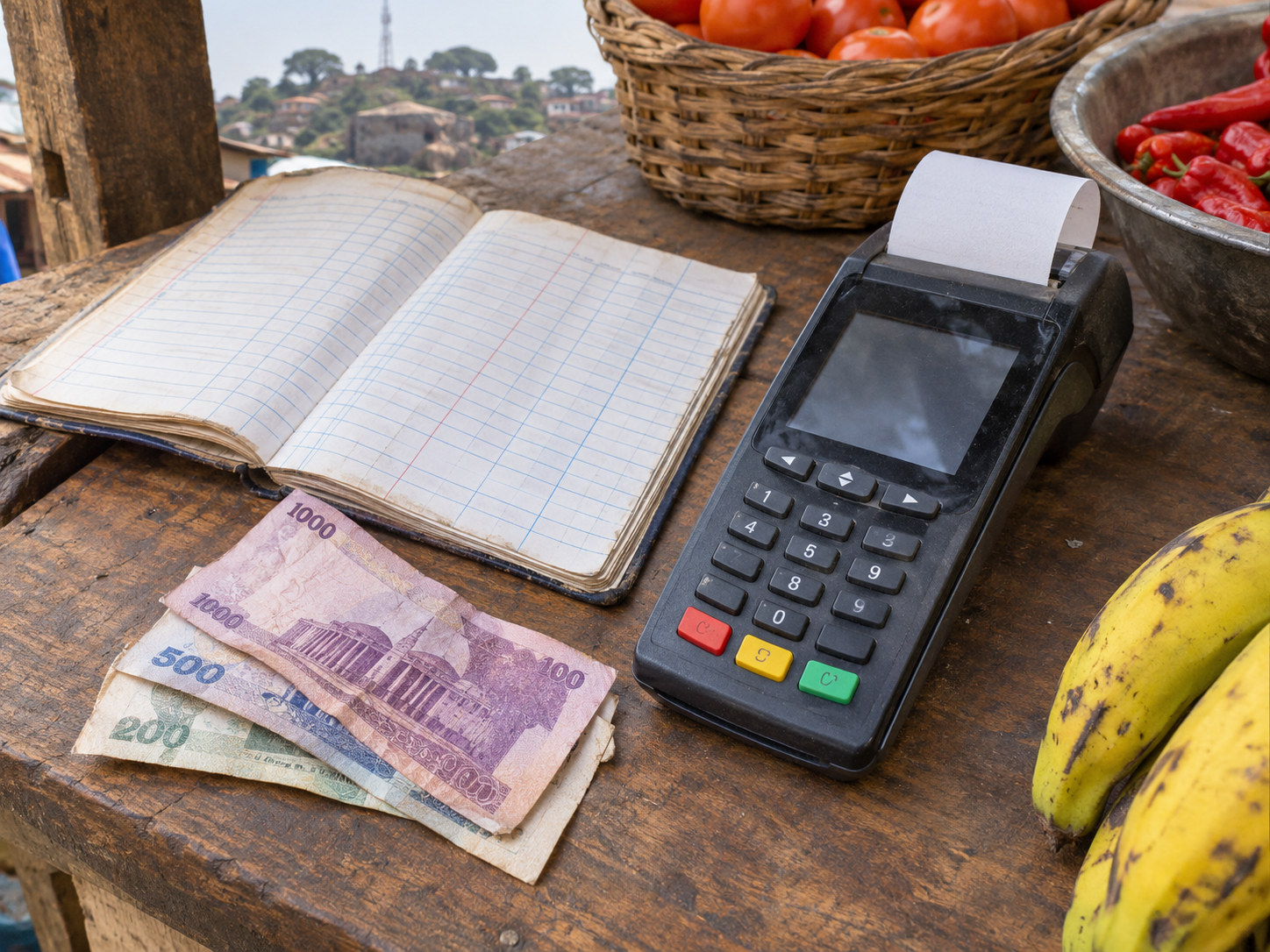
Start with the job, not the brand ranking. A shop that handles cash needs different features from someone receiving a salary or sending money from a basic phone.
| Use case | Prioritise | Trade-off to test |
|---|---|---|
| Daily person-to-person transfers | Beneficiary name display, transaction history, low friction and accessible dispute support. | Transfer fees, failed-payment handling and support during congestion. |
| Market stall or POS agency | Verified incoming credits, cash-out access, settlement records and reliable agent support. | Network interruptions, cash liquidity, terminal problems and forged alerts. |
| Basic phone or unstable data coverage | USSD availability, nearby authorised agents and simple account recovery. | USSD session failures, SIM security and agent commissions. |
| Online shop or social-commerce seller | Payment links, merchant checkout, verifiable transaction references and refunds. | Gateway settlement timing, chargeback rules and customer disputes. |
| Holding savings or a large balance | Underlying licence, NDIC coverage category, fraud controls and account-access resilience. | Coverage ceilings, transfer restrictions and separation from business operating cash. |
| Receiving funds from overseas | Approved remittance route, payout currency and identity requirements. | Foreign-exchange terms, provider availability and KYC restrictions. |
Check the total cost : transfers, agent cash-outs, card or POS fees, failed payments and any foreign-exchange spread. Free transfers are of little use if withdrawing cash costs more or takes too long. Fees and promotions change; use the amount displayed before authorising, not an old comparison posted online.
A backup account helps during an outage. It needs its own secure recovery details, and the second provider should be licensed too.
Where transaction security actually comes from
Security controls solve different problems. Encryption protects data, authentication restricts account access, fraud monitoring flags suspicious activity, and a provider's procedures determine how incidents are examined. Strong encryption cannot tell whether a recipient is a scammer.
Identity and onboarding: BVN, NIN and KYC
Know Your Customer (KYC) checks connect accounts to identified users. Nigeria relies on the Bank Verification Number (BVN) and National Identification Number (NIN); the National Identity Management Commission (NIMC) administers the national identity system. Under CBN's tiered wallet requirements , Tier 1 individual wallets require BVN or NIN, while Tiers 2 and 3 require both. Higher tiers have additional checks and different limits under regulation and provider rules.
KYC helps limit anonymous account abuse, but it does not justify sending identity documents or a live OTP to a stranger in a chat. A caller asking for BVN, NIN, PIN and OTP together is a warning sign.
PINs, biometrics and multi-factor authentication
Use different credentials for the phone lock and transaction PIN. Fingerprint or face verification can protect app access; multi-factor authentication (MFA) combines separate checks, such as a password and a trusted device. SMS one-time passwords (OTPs) are vulnerable if someone takes over the SIM.
Moniepoint MFB's published MFA approach describes additional checks for higher-value transfers. Look beyond the biometric symbol on a login screen: transfers, device changes and account recovery may use different security controls.
Encryption, card controls and fraud detection
Encryption, secure sessions, access controls and audit logs protect payment systems. Tokenisation limits exposure of card details in compatible services; EMV chip technology and 3-D Secure (3DS) address card-payment threats. The Payment Card Industry Data Security Standard (PCI DSS) covers cardholder-data handling. None guarantees that an authorised bank transfer can be recalled.
Fraud systems monitor unusual devices, transaction speed, beneficiaries and account activity. They also make mistakes: a legitimate transfer may be blocked. Recovery should involve identity checks through official channels, never a demand for the customer's PIN or OTP.
What changed in Nigeria's instant-payment security rules in 2026?
A CBN directive issued on 12 March 2026 took effect on 1 July 2026 . It calls for single-device binding in mobile financial services apps, renewed authentication after a device change, liveness checks in specified onboarding or reactivation processes, and stronger real-time fraud monitoring.
For new accounts , a newly activated mobile financial services app faces a first-day cap of up to ₦20,000 for inflows and outflows . For existing accounts activated on a new device , the first-24-hour cap applies to outflows . Providers set limits within the CBN maximum. First-time internet banking on a new device also needs extra MFA. A replacement phone can therefore trigger a temporary restriction even when the account holder is genuine.
Customers may also opt out of instant transfers or request lower personal limits, subject to provider verification. The settings and availability differ by institution. See the CBN's 2026 regulatory updates and the published account of the circular for details of the March 2026 measures.
Are balances in mobile wallets protected by NDIC?
The Nigeria Deposit Insurance Corporation (NDIC) covers eligible deposits when an insured institution fails. It is not insurance against every mistaken transfer, stolen PIN, merchant dispute or investment loss.
NDIC limits introduced in May 2024 are ₦5 million per depositor per deposit money bank , ₦2 million per depositor per microfinance bank or payment service bank and up to ₦5 million per mobile-money subscriber per MMO under the relevant pass-through deposit insurance arrangement for pooled funds at insured banks. The deposit guarantee overview explains the coverage categories.
Two wallets can look identical while the money sits under different arrangements. An MMO, MFB and PSB are not interchangeable; a payment gateway performs another role entirely. Before keeping a large balance, identify the regulated institution and check which funds qualify for which coverage.
Being tricked into authorising a payment is a fraud-recovery issue, not an NDIC deposit-insurance claim.
The fraud patterns that cause real losses
Nigerian digital-payment fraud losses reported for 2025 were ₦25.85 billion , compared with ₦52.26 billion in 2024, according to NIBSS in June 2026 . One major incident inflated the 2024 figure, so the fall does not mean a particular wallet is safe. NIBSS continued to identify phishing, social engineering, SIM swaps and account compromise.
| Threat | What the attack looks like | Practical defence |
|---|---|---|
| Phishing, smishing and vishing | A fake bank website, urgent SMS or caller claims a wallet will be blocked unless a customer supplies credentials. | Open the provider's official app directly; never disclose a PIN, password or OTP to a caller or chat contact. |
| SIM-swap takeover | A fraudster gains control of the customer's phone number, then targets SMS codes and account recovery. | Protect the SIM account with the mobile operator, prefer stronger MFA where available, and act immediately on unexplained loss of signal. |
| Fake credit alerts | A buyer presents an edited transfer receipt, SMS or animation to a shopkeeper. | Confirm the incoming credit from the seller's own account or merchant dashboard before releasing stock or cash. |
| Impersonated support staff | A social-media “helpdesk” asks for a screen-sharing session, remote-access app or verification code. | Use contact details found in the provider's app or official website; do not grant remote control of a banking device. |
| QR-code substitution | A sticker or changed payment request routes money to a different beneficiary. | Read the displayed merchant name and amount before authentication; confirm credit in the merchant's own system. |
| Lost phone or malicious app | An unlocked device or sideloaded APK exposes account sessions and payment credentials. | Use a strong phone lock, install from official stores, keep software updated and enable the provider's account-blocking options. |
The Nigerian Communications Commission (NCC) warns about smishing and SIM-swap fraud . A fraudulent caller may even trigger a genuine OTP. Its arrival on your phone does not make the caller legitimate, and the code should stay private.
Safer habits for transfers, cash-outs and merchant payments
Before sending money
Before paying, compare the beneficiary name on-screen with the name you expected. A last-minute change of account details deserves a separate check with the seller. Review the amount, bank and fee before entering a PIN. A small test transfer can catch wrong account details, but cannot prove that a stranger will deliver the goods.
Keep the transaction PIN separate from the phone password, and do not hand an unlocked banking device to an unfamiliar person. Hide sensitive lock-screen notifications where possible. Secure the email account used for recovery. Lower spending limits can reduce the loss if someone gains account access.
At an agent or POS terminal
Agree the commission before a POS cash-out or deposit. Check the terminal amount, shield the keypad and count the cash. If the card is debited but no cash appears, keep the reference. A printed slip records an attempt; the account history shows whether the debit actually posted.
CBN PoS oversight covers terminal location and industry standards, but it does not replace checking the agent, amount and outcome.
At a shop or online checkout
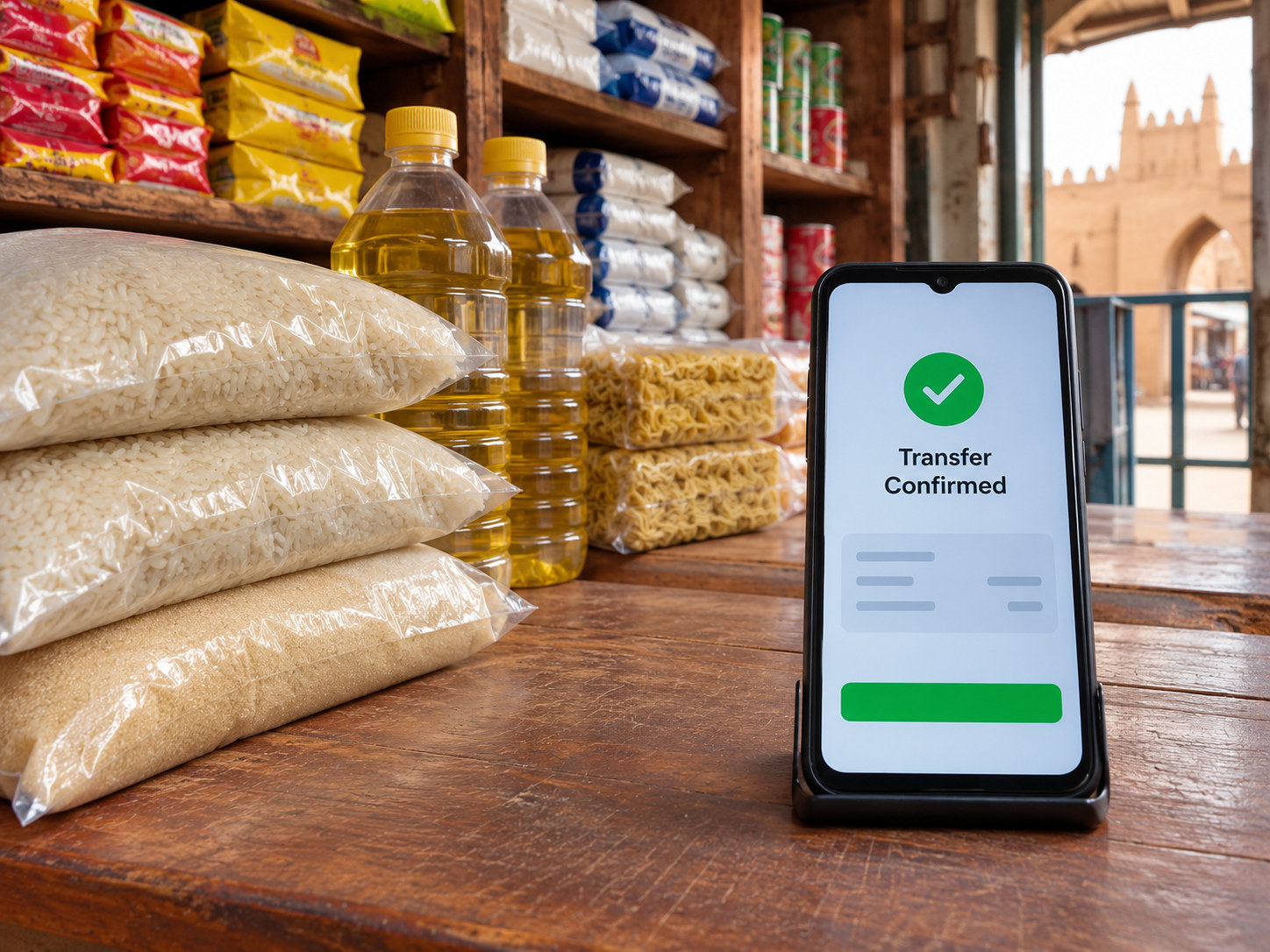
With Nigeria Quick Response (NQR) , the customer scans the code, checks the merchant name and amount, then approves payment. The seller still verifies receipt. A QR code identifies a destination; it cannot establish that an unfamiliar merchant or website is trustworthy.
For Paystack, Flutterwave and other checkout gateways, an initiated payment is not the same as a confirmed one. Sellers need a verified gateway status tied to the order before dispatching goods. Refunds and chargebacks differ for cards, bank transfers and wallet payments; a WhatsApp screenshot settles none of those questions.
Digital payments without reliable mobile data
Lagos, Abuja and Port Harcourt have widespread smartphone payments, but patchy data coverage still makes USSD and agents useful. Unstructured Supplementary Service Data (USSD) works over the mobile network without smartphone data. It needs network service, a registered SIM and careful PIN handling.
Paga lists a *242# USSD menu for transfers, balance checks and cash services; MoMo PSB lists *671# as an access channel. Shortcodes, fees and eligibility change. Verify them through the provider rather than a forwarded message.
Agents turn wallet balances into cash, including in underserved areas. A shop can still run into an agent without enough cash, a mistyped account number or a disputed handover. Record the amount, time, recipient details and transaction reference during the sale, not from memory after closing.
When a transfer fails, remains pending or goes to the wrong person
A pending credit, an unauthorised debit, a transfer to the wrong person and a dispute over undelivered goods need different responses.
| Problem | Immediate record to check | Appropriate first route |
|---|---|---|
| Sender debited; recipient not credited | Transfer reference, time, amount, selected bank and each side's transaction status. | Raise a failed-transfer case with the sending institution; ask it to trace the payment and reconcile the status. |
| Transfer to an incorrect account | Beneficiary account, name displayed before confirmation and transaction reference. | Notify the sending institution promptly and request a formal recall; recovery is not automatic. |
| Unknown or unauthorised debit | Account history, device/session warnings, unusual beneficiary details. | Report suspected fraud immediately, request restrictions on the account and ask for a case reference. |
| Merchant reports no payment | Merchant's own credit record and confirmed gateway or wallet status. | Verify settlement through the receiving institution; do not rely on a customer's transfer screenshot. |
| Card/POS debit without value | Card or terminal receipt and the financial transaction record. | Open a card/POS dispute with the issuing institution and retain the reference. |
When the sender was debited but the recipient was not credited, lodge a failed-transfer complaint with the sending institution. Supply the reference, date, amount and receiving bank. Avoid sending the same money again until its status is clear: both payments may eventually arrive. Request a written update if the case stalls.
For fraud , act immediately. Contact the provider's fraud desk or emergency blocking channel, change exposed credentials from a safe device and alert the mobile operator about a suspected SIM swap. The Nigeria Police Force or Economic and Financial Crimes Commission (EFCC) may also receive reports as appropriate. CBN's fraud guidance advises contacting the financial institution without delay.
The CBN's Consumer Protection Department allows escalation after an institution's applicable response window; general guidance mentions two weeks, although some complaints follow different deadlines. Keep the complaint reference, statements, messages and provider responses. Filing a recall or complaint does not guarantee repayment.
Privacy belongs in the security decision
Wallet providers handle identity documents, transaction records, device information and, for some services, location data. Those records support anti-money-laundering (AML) and counter-terrorist-financing (CFT) checks and fraud detection. A leak or impersonator can exploit the same information.
The Nigeria Data Protection Commission (NDPC) administers the Nigeria Data Protection Act 2023. Providers must meet its obligations when processing personal data, while individuals have statutory rights. Check how a service explains collection, sharing, correction requests and privacy complaints. Privacy breaches and payment fraud overlap, but they are not the same harm.
Complete BVN/NIN checks through official channels. Do not send account statements or identity documents to an unverified social-media “helper”. Nobody handling a legitimate reversal needs your transaction PIN or current OTP.
Questions Nigerian wallet users ask before trusting a transfer
Is OPay or PalmPay safer than a traditional bank?
There is no brand-wide answer. CBN lists OPay and PalmPay as MMOs; a conventional bank has a different licence. Compare account safeguards, NDIC coverage and recovery processes for the specific account. No provider can make sending money to a scammer safe.
Does a successful transfer receipt prove the recipient was paid?
No. A sender's receipt helps trace a payment, but the recipient must see the credit in their own account or merchant system. Screenshots and SMS alerts can be altered.
Can a transfer be reversed after it has been sent?
Failed or duplicate debits can qualify for reconciliation or reversal. A transfer authorised to the wrong person requires a recall and may involve the receiving institution, consent or lawful recovery steps. Fraud has a separate inquiry path. Immediate repayment is never guaranteed.
Can I use a wallet without BVN or NIN?
CBN rules require BVN or NIN for Tier 1 individual accounts and wallets, and both for Tiers 2 and 3. Each institution handles onboarding differently. A third-party “activation agent” offering to bypass identity checks is not a safe workaround.
Is USSD safer than a mobile app?
USSD needs no data connection, but depends on the SIM and can be compromised through SIM swaps or exposed PINs. Apps may offer biometrics, device binding and detailed alerts; they also require a secure, updated phone. Neither protects against paying the wrong person.
Should a business accept a payment alert as proof of payment?
No. Release goods or cash only when the seller's own account or gateway shows the credit matched to the order. A buyer's alert - even one that looks genuine - is not enough.
A trustworthy payment has three separate records
Institutional proof: identify the licence holder and the account's NDIC arrangement. Transaction proof: confirm the payee and amount, then check the receiving institution's credit record. Recovery proof: know which official channel handles failed payments, account takeovers and disputes.