
South Africa has a large mobile gaming audience and an established PC, console and local game-development scene. Studios in Johannesburg and Cape Town publish games overseas, while local organisers run LAN events and esports tournaments. For Nigerian players, the useful comparison is practical: both markets depend heavily on phones, but their servers, payment options and gaming industries work differently.
Sea Monster , a South African studio, puts the country's gaming audience at about 26.5 million people - roughly 42% of the population. Its estimate counts occasional mobile players alongside those using consoles and PCs. Competitive titles such as VALORANT and Tekken form only part of that audience; puzzle games reach people who never enter a tournament.
How big is South Africa’s gaming market?
South Africa sits alongside Egypt and Nigeria among Africa's largest video game markets. The August 2026 Carry1st - Newzoo forecast puts South African game revenue at $263 million in 2026. Nigeria is forecast at $226.6 million and Egypt at $458.1 million. Across Africa, it projects $1.98 billion in games revenue, 81.8% from mobile. None of those figures is a final audited sales total.
| South Africa gaming indicator | Figure | How to interpret it |
|---|---|---|
| People who play video games | About 26.5 million | Sea Monster's 2026 audience estimate; all platforms combined |
| Mobile gamers | About 22 - 23 million | Mobile is the largest entry point for play |
| PC gamers | About 4.9 million | Includes people who may also use other platforms |
| Console gamers | About 2 million | Includes PlayStation, Xbox and Nintendo audiences |
| 2026 games revenue | $263 million forecast | Carry1st - Newzoo's August 2026 market estimate |
The platform figures overlap. Someone playing Candy Crush on Android and EA Sports FC on a console may count in both groups, so the audience totals cannot be added. Forecasts also differ. Sea Monster quotes an earlier rise from $266 million in 2023 to $333 million by 2026 , rather than the newer Carry1st - Newzoo estimate of $263 million. The sources use different reporting vintages or assumptions; comparisons with Nigeria need a common year and definition.
Why smartphones dominate gaming in South Africa
Most free-to-play mobile games work on a phone the player already owns; PlayStation 5, Xbox Series X|S and gaming PCs require a separate hardware purchase. That cost gap helps explain mobile gaming’s larger audience. Short puzzle sessions coexist with lengthy football, shooter and online multiplayer matches; an inexpensive download may still require substantial data or purchases.
Sea Monster estimates 22 - 23 million mobile players, about 4.9 million PC players and roughly 2 million console players. More than half of the country's digital gamers are aged 15 - 34, and its estimate puts the gender split close to even. Word-game and simulation players count too; the market is not confined to esports fans.
Popular games and the audiences they serve
| Type of game | Recognisable titles | What attracts players |
|---|---|---|
| Casual and puzzle | Block Blast! , Candy Crush , Subway Surfers | Short sessions, accessible controls and low barriers to entry |
| Football and sports | EA Sports FC Mobile , Football League ’26 , eFootball | Football fandom, team-building and competitive matches |
| Mobile action and shooters | PUBG Mobile , Call of Duty: Mobile , Free Fire | Multiplayer competition, rankings and squad play |
| Social and creative worlds | Roblox | User-created experiences and social interaction |
| PC and console competition | VALORANT , Counter-Strike 2 , Rocket League , Tekken 8 | Precision play, organised tournaments and spectatorship |
Block Blast! , Roblox , Candy Crush , Football League ’26 and Subway Surfers appear in South Africa-focused coverage of popular games. Tournament organisers feature titles including Counter-Strike , Rocket League and Tekken . These are examples by genre, not a verified countrywide ranking. Google Play and Apple's App Store simplify finding; data charges, updates and in-game purchases still affect the cost of playing.
On a basic Android phone, a puzzle game may run smoothly where a graphics-heavy 3D shooter struggles. Storage, memory, heat and connection stability matter as much as the listed price. Large downloads and frequent patches can exhaust a mobile data bundle even for free-to-play games. Check update sizes and offline modes before committing to a title.
PC, console gaming and the importance of local servers
PC and console communities are especially visible around Gauteng and the Western Cape. Their players buy or download games through Steam, the Epic Games Store, PlayStation, Xbox and Nintendo. PC players can install mods, and both PC and console players have access to local multiplayer and premium indie releases. Hardware prices and connectivity still put those options beyond many households.
Server location matters in competitive games. In August 2023, Riot Games launched a Cape Town server for VALORANT with African publisher Carry1st. The server sits within the game's EU shard and gives South African players a local connection option instead of relying exclusively on European hosts. That does not guarantee a lower ping from Lagos, Abuja or Port Harcourt.
From Nigeria, the best server is whichever produces low ping without packet loss. Internet-provider routing and regional matchmaking can matter more than the distance to Cape Town or Johannesburg. Check the in-game ping and connection stability against available European servers. Tournament account-region and residency rules are a separate question from whether a normal match is playable.
South African game studios and games worth knowing
South African studios sell original PC and console games internationally, not just games for their home audience. The 2026 State of African Games analysis identifies the country as a major African centre for developers and commercial unit sales. It also finds a mismatch between genres developers make most often and genres with stronger median sales. A Steam listing alone says little about whether a studio can cover its costs.
| Studio or company | South African gaming connection | Notable work or role |
|---|---|---|
| Free Lives | Locally owned game studio | Broforce , GORN , Anger Foot , Terra Nil and Stick It to the Stickman |
| Nyamakop | Johannesburg-based studio | Semblance and Relooted |
| The Brotherhood | Cape Town-based developer | STASIS , BEAUTIFUL DESOLATION and STASIS: BONE TOTEM |
| QCF Design | South African game studio | Desktop Dungeons and Desktop Dungeons: Rewind |
| Clockwork Acorn | Local development and collaborations | Jetstream , Feather's Edge and work alongside Free Lives on Terra Nil |
| Sea Monster | Interactive and impact-game production | Educational experiences, branded games and gaming-audience analysis |
| 24 Bit Games | Development and technical production services | Part of South Africa's broader production ecosystem |
| Carry1st | Africa-focused publisher and digital-commerce company | Game distribution, local payments and partnerships, including with Riot Games |
The names in South Africa's industry have distinct roles. Free Lives, Nyamakop and The Brotherhood develop original titles; Sea Monster produces educational and branded interactive experiences. Carry1st handles publishing, distribution and digital commerce. Nyamakop describes a focus on African-inspired games for international PC and console players. The Brotherhood's press kit lists PC and major console releases of STASIS: BONE TOTEM .
From Broforce to Relooted : different kinds of African creativity
Broforce is loud, cooperative action; Terra Nil is a strategy game about restoring damaged environments. Anger Foot leans into frantic, stylised combat, whereas STASIS: BONE TOTEM mixes science-fiction horror with puzzles. None needs an explicitly African setting to find an international audience.
Relooted , released by Johannesburg studio Nyamakop in February 2026, takes a different approach. Its Africanfuturist heist story centres on African artefacts held in Western museums and questions of restitution and ownership. Coverage of the release names Steam, the Epic Games Store and Xbox among its platforms. Its subject is distinctive, but sales, reviews and launch quality are separate measures of success.
Local stories can travel across borders without every African studio producing the same sort of game. The 2025 GeoPoll - Pan Africa Gaming Group study found an interest in cultural representation across six surveyed countries, including Nigeria and South Africa. Those combined findings do not provide a South Africa-only percentage. Studios still have to match their themes with workable mechanics and a clear audience.
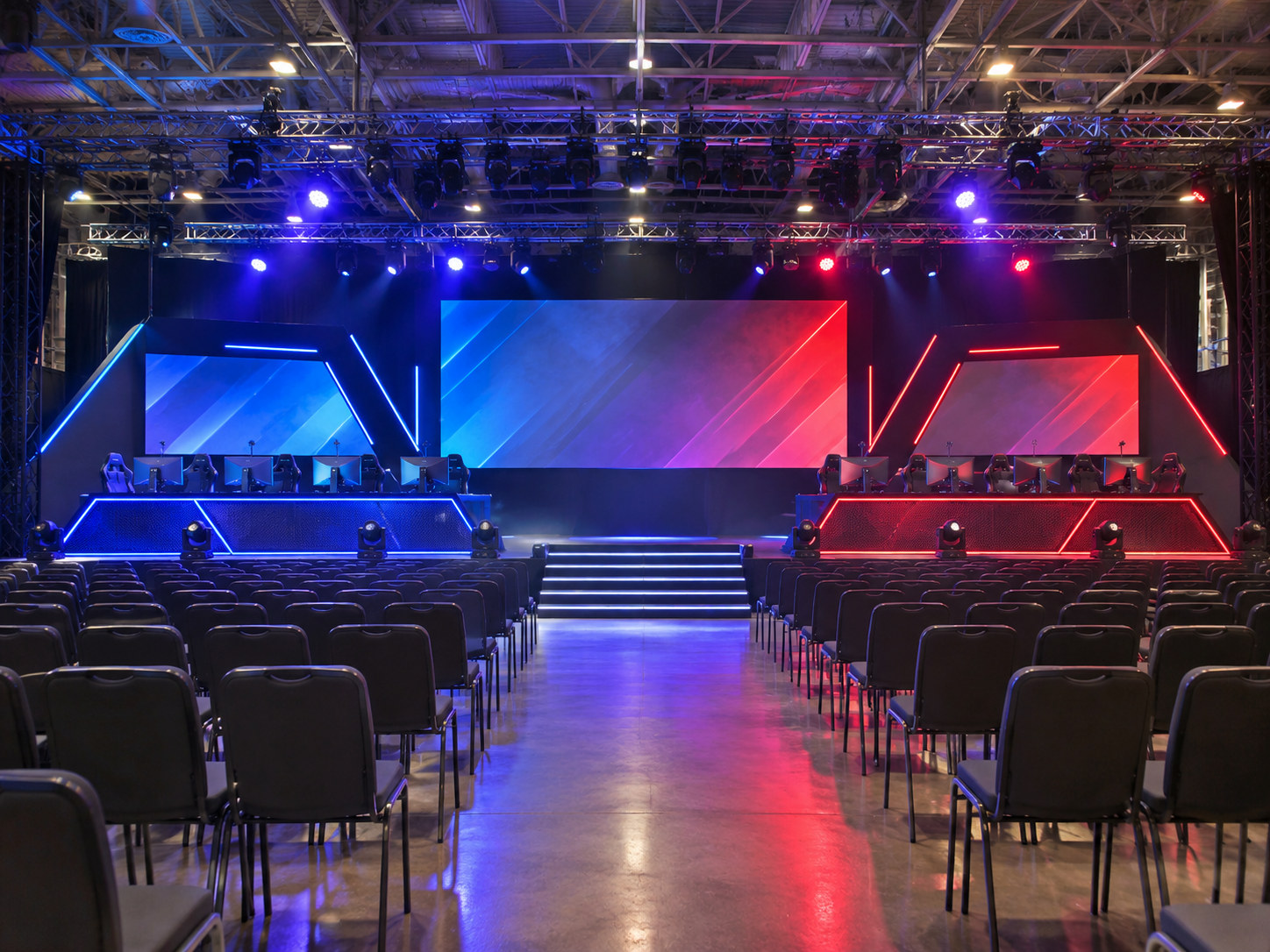
Esports, tournaments and gaming communities
Competitive gaming spans online ladders, campus play, LAN gatherings and sponsored tournaments. Sea Monster estimates about 1.5 million active competitive players in South Africa; that is not a count of paid esports professionals. VS Gaming and Mettlestate organise competitions. Telkom, Red Bull South Africa and Monster Energy are among the brands associated with the scene.
Comic Con Africa's VS Gaming events have covered mobile, PC and console play. Tournament programming have included Counter-Strike , Rocket League and Tekken , while other circuits feature PUBG Mobile , Call of Duty and football games. Prize pools, qualifiers, age limits and schedules vary by event.
Not every gaming event is built around a prize pool. Johannesburg's rAge combines LAN play, exhibitors, cosplay and fan culture. Cape Town's Playtopia showcases locally developed games and interactive art. Africa Games Week serves developers and publishers looking at funding or partnerships. A tournament spectator, indie developer and studio founder will not get the same value from each event.
Nigerians can often watch South African events online without being eligible to compete. An entrant may need local residency, an invitation, a designated server region or physical attendance. The event's rulebook - not a stream or general tournament announcement - determines nationality rules, qualifiers, age limits, devices, anti-cheat checks and travel requirements.
What South African gaming means for Nigerian players
The same game can cost or connect differently in Nigeria and South Africa. A top-up accepted by a South African store may fail on a Nigerian account. Matchmaking and server access also vary by title. Each game's regional terms still govern purchases and server access.
The revenue ranking changes with the year and source. Carry1st - Newzoo's 2024 estimates put Nigeria at $300 million and South Africa at $278 million; the 2026 forecasts give South Africa $263 million and Nigeria $226.6 million, behind Egypt. A change in estimates is not a measured drop in actual spending: market definitions and forecasting assumptions can shift between reports. They also cannot stand in for the whole African gaming industry.
Paying for games is a local problem, not just a currency conversion
Carry1st Shop in Nigeria lists OPay and bank transfer on eligible game top-ups. Its South African storefront lists Capitec Pay and 1Voucher. Both offer products for titles such as Call of Duty: Mobile and Free Fire , but catalogues, account eligibility, local prices and checkout methods differ.
A rand price cannot simply be converted into an available naira checkout price. For game purchases, battle passes, subscriptions, gift cards and virtual currency, check account country, platform region, payment support, exchange charges and redemption limits . A code bought for the wrong region may be unusable even after payment. The seller and the game platform may impose different region restrictions.
Shared creative ambitions, different strengths
South African studios are known for locally developed PC and console games; Nigerian teams have built mobile titles and games rooted in local culture. Lagos-based Maliyo Games created Crazy Ludo , Whot King , Safari City and Disney Iwájú: Rising Chef . The last draws on Nigerian food and a futuristic Lagos. Maliyo's work is Nigerian, not South African, but it makes a useful contrast with Nyamakop's Relooted : cultural material can support very different games.
A Nigerian mobile developer and South African studio might share a publisher but use different storefronts and payment providers. Before release, each local market still needs checks for supported devices, language, data use, prices and customer support.
Game development opportunities and industry limits
Cape Town and Johannesburg support local studios employing programmers, artists, producers, audio specialists, QA testers, narrative designers and community managers. Unity appears frequently in African PC-game development coverage; Unreal Engine and Godot are alternatives. Engine choice comes down to the game, target devices, team skills and licence conditions, not which tool is most fashionable.
Africa Games Week brings studios into contact with publishers and other industry partners. Playtopia's game showcase has accepted playable projects that are not fully polished; the Playtopia Foundation supports prototypes through Makers Massive and The Jam Dole. A showcase slot does not guarantee a job or publishing contract. Dates, residency and eligibility depend on each programme.
Studio jobs need a portfolio; an self-published release needs playtesting and a budget; contract work needs clear deliverables. For an event or distribution business, partner agreements and revenue shares matter more than a pitch about a promising market.
Expensive hardware, data bills, storage limits and power interruptions affect players and studios. Developers also face funding, visibility to players, quality assurance and international distribution costs. A game made in South Africa can sell on Steam or consoles around the world without finding many local paying customers. Nigerian creators face the same distinction between where a game is made and where its buyers live .
South Africa’s place in the future of gaming in Africa
Carry1st and Newzoo forecast more than 406 million African game players in 2026 , with mobile contributing most games revenue. South Africa brings established studios, esports events, urban PC and console communities and game-serving infrastructure. Nigeria has a large mobile audience and developers drawing on Nigerian stories. Revenue forecasts do not capture who builds games, which devices they run on or where customers spend their money.
For mobile games, player retention, device support, completed payments and data consumption say more than download counts. For esports, organisers need repeat participation, clear entry rules and stable connections. For local studios, finished releases, ownership of rights and sustainable sales matter more than the number of projects announced.
Frequently asked questions about gaming in South Africa
Is South Africa the biggest gaming market in Africa?
By Carry1st - Newzoo's 2026 revenue forecast, Egypt leads, followed by South Africa and Nigeria. Rankings vary with the source, market definition and year.
How many people play video games in South Africa?
Sea Monster puts the total at about 26.5 million, including 22 - 23 million mobile gamers. PC and console audiences overlap with mobile.
Which internationally known video games were made in South Africa?
South African teams have developed Broforce , Terra Nil , Anger Foot , Semblance , Relooted , Desktop Dungeons and STASIS: BONE TOTEM .
Can a player in Nigeria use South African game servers?
When the game and account region allow it. Cape Town has a VALORANT server, but routing and matchmaking determine latency from Nigeria. Server access alone does not establish tournament eligibility.
Can Nigerian esports teams enter tournaments in South Africa?
Entry depends on the tournament. Some accept overseas teams; others require local residency, on-site attendance or particular qualifiers.
Does “gaming” here include betting and online casinos?
No. Video gaming and esports are separate from sports betting, online casinos and other real-money gambling. Their audience and revenue statistics should not be mixed.